






Application & Platform Modernization That Supports Stability and Change
We modernize core applications that continue to run the business, yet increasingly restrict delivery speed, scalability, and safe change. Decisions at this stage influence engineering capacity, release confidence, and the ability to introduce new capabilities without risk. Designed for teams operating production platforms that require controlled evolution, reduced technical debt, and dependable execution.
Execution Challenges in Platform Modernization
Most platforms do not fail suddenly. Constraints build gradually until delivery slows and risk increases.
Big-bang rewrites exceed tolerance
Full rebuilds often stretch timelines, budgets, and operational limits.
Endless patching adds complexity
Incremental fixes accumulate without addressing structural risk.
Technology-first upgrades miss architectural needs
Framework or cloud changes proceed without correcting foundational design gaps.
Legacy coupling carried forward
Dependencies remain intact, limiting the benefits of modernization.
Release instability affects production
Modernization work introduces risk when changes are not isolated.
The Biggest Risk Is Allowing Platforms to Constrain Strategy
Risk shifts when production systems begin to restrict delivery and growth. What once felt manageable starts influencing reliability, security, and execution.
Teams often face challenges such as:
Delayed initiatives caused by brittle release cycles
Platforms are struggling as users, data, or integrations increase
Aging components driving incidents and downtime
Expanding attack surface due to outdated dependencies
Knowledge is concentrated around a few engineers or vendors
Rising maintenance effort that limits forward progress
Technical gaps matter. Greater risk comes from allowing the status quo to shape business direction.
Effective modernization focuses on strengthening platforms so they support change rather than resist it.
How This Translates Into Execution
Execution prioritizes production safety, then structured progress, followed by sustained evolution.
Phase 01
Assessment-led planning
Risk addressed: Modernization efforts drift without clear priorities.
Define scope based on risk and business impact
Identify components that influence delivery the most
Establish a modernization path grounded in operational realities
The objective is to begin with clarity so the effort targets the right areas.Phase 02
Prioritized modernization backlog
Risk addressed: Work expanding without delivering meaningful progress.
Sequence initiatives to unlock value early
Focus on areas that reduce risk or improve delivery
Prevent low-impact work from consuming capacity
Momentum builds through deliberate prioritization.Phase 03
Sprint-based delivery
Risk addressed: Large changes increasing instability.
Deliver refactoring and platform updates in small increments
Validate each change before proceeding further
Maintain release confidence throughout execution
Progress continues without introducing unnecessary disruption.Phase 04
Parallel operation
Risk addressed: Transition phases affecting live systems.
Allow legacy and modern components to run together safely
Support continuity while modernization advances
Reduce exposure during platform shifts
Stability is preserved while the platform evolves.Phase 05
Continuous validation
Risk addressed: Improvements proceeding without measurable evidence.
Track stability, performance, and delivery metrics
Use data to guide decisions
Confirm that changes strengthen the platform
Measurable progress ensures modernization is moving in the right direction.
Proven Across Production Platforms
We modernize live applications while preserving continuity, enabling safer change and stronger delivery.
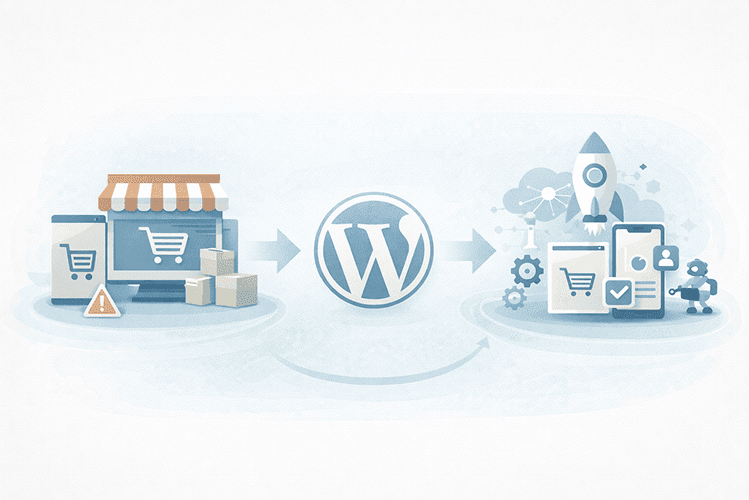
Legacy WordPress Commerce Platform Transformation
An existing WordPress storefront operated on an outdated static theme that restricted performance and usability.
- Poor responsiveness and performance
- Accumulated front-end and workflow debt
- Checkout friction leading to cart abandonment
- Limited product discovery
- Weak security posture
- High risk when modifying core flows
- Refactored and customized the legacy theme
- Modernized layout and responsive behavior
- Redesigned purchase and checkout journeys
- Improved navigation and merchandising
- Added recommendations and promotions
- Strengthened security and limited unnecessary plugins
- Modernized commerce platform
- Improved engagement and conversion rates
- Reduced checkout friction
- Lowered change risk
- Extended platform usability without a full rebuild
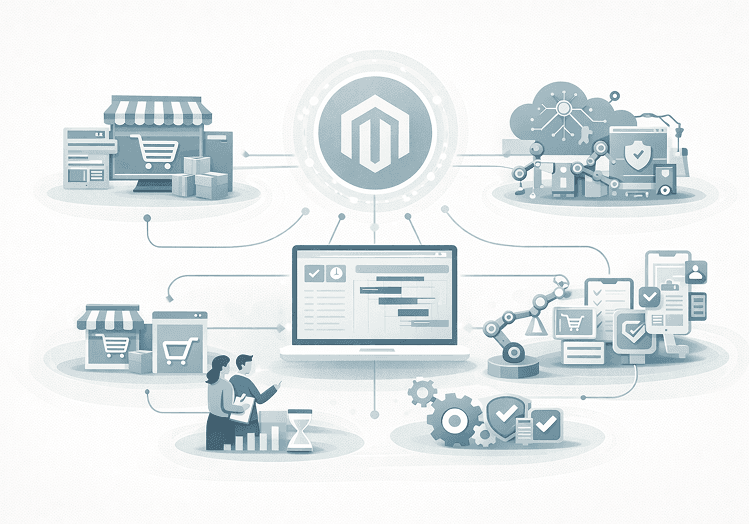
Magento E-commerce Platform Evolution
A mission-critical Magento platform continued to generate revenue yet faced mounting technical debt, fragile workflows, and increasing security exposure. Changes carried a high risk and slowed delivery.
- Technical debt across custom modules and integrations
- Failure-prone batch jobs for pricing and inventory
- Risk tied to checkout and order flows
- Limited visibility into background processes
- Growing security exposure
- Slower releases due to fear of breaking core functionality
- Refactored Magento customizations and reduced coupling
- Improved batch processing and integration patterns
- Modernized Amazon Seller Central integration using SP-API
- Stabilized order ingestion and lifecycle visibility
- Introduced structured logging and traceability
- Applied security patches, address verification, and CAPTCHA
- Stabilized production platform
- Improved operational reliability and observability
- Secured transaction workflows
- Reduced technical risk in ongoing changes
- Modernization extended the platform lifecycle without disruptive rewrites
Start With Clarity Before Modernizing Further
A structured evaluation reveals where architecture and technical debt create risk.
Free Modernization Assessment
A focused review designed to identify constraints and define what should be addressed first.
What we assess
- High-risk components and dependencies
- Technical debt affecting delivery
- Safe modernization paths
- Refactoring versus platform changes
What you receive
- Clear view of platform risk
- Prioritized recommendations
- Guidance on next steps
Who This Is For
Teams that:
- Experience slow or risky releases
- Operate platforms with growing technical debt
- Need clarity before initiating modernization
Free Modernization Assessment
A focused review designed to identify constraints and define what should be addressed first.
What we assess
- High-risk components and dependencies
- Technical debt affecting delivery
- Safe modernization paths
- Refactoring versus platform changes
What you receive
- Clear view of platform risk
- Prioritized recommendations
- Guidance on next steps
Who This Is For
Teams that:
- Experience slow or risky releases
- Operate platforms with growing technical debt
- Need clarity before initiating modernization
Collaborate with Bobcares
Get actionable solutions for your business